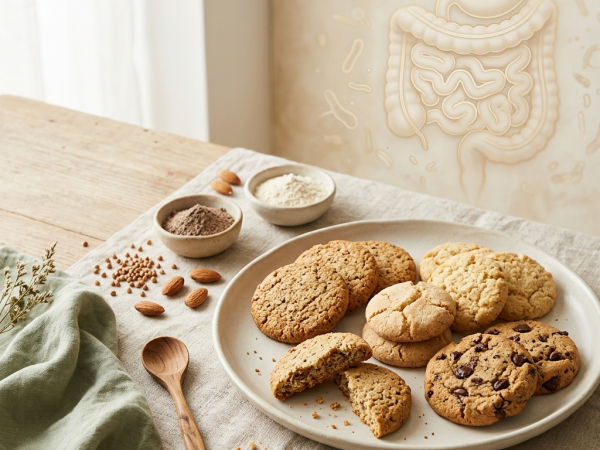
The gluten-free diet has become one of the biggest phenomena of modern times. While for people with celiac disease it is the only possible treatment and a matter of survival, healthy individuals often integrate it into their lives as a lifestyle trend in the hope of gaining more energy, a leaner figure, and better digestion. But what actually happens inside our body—more specifically, in our gut microbiome—when we eliminate gluten overnight? Scientific research shows surprising results: what helps one person can harm another.
The small intestine: The food processing plant
The small intestine is a key organ of the entire digestive tract. It begins right after the stomach and ends at the large intestine, spanning a length of 3 to 5 meters in an adult. This is where the most critical part of digestion takes place: food is completely broken down, and the body absorbs the necessary nutrients. The inner wall of the intestine is far from smooth; it is full of tiny projections and folds known as villi. Thanks to this clever structure, the intestine has a vastly expanded surface area, allowing it to utilize an incredible 90% of the nutrients from the food we eat. In addition, it contains numerous immune cells that protect us from various infections. It is no wonder that a healthy small intestine is the foundation for our body's overall fitness.
Gluten, its digestion, and its impact on celiacs
Gluten is a general term for two plant proteins found in grains: gliadin and glutenin. They are insoluble in water and typically make up 70–80% of the proteins in a cereal grain. They are primarily found in wheat, rye, barley, and oats. Gluten is highly favored in baking because it acts as a "natural glue," giving baked goods elasticity and a fluffy shape. Without it, dough becomes crumbly and holds together poorly.
However, the structure of gluten that is so desirable for baking can cause major issues inside the human body. Human enzymes cannot break these bonds 100%. Consequently, gluten is never fully broken down into its basic building blocks—individual amino acids—leaving behind longer fragments known as peptides. In a healthy person, the body processes these residual peptides without issue. In people with celiac disease, however, the immune system reacts to the un-decayed gluten fragments as if they were a dangerous infection:
- Autoimmune inflammation trigger: As soon as gluten reaches the intestinal wall, an autoimmune inflammatory response is triggered.
- Cellular attack: Immune cells mistakenly begin attacking and destroying the small intestine's own cells.
- Villi atrophy: The result is atrophy (flattening) of the intestinal villi. What was once a dense carpet turns into a smooth surface.
- Dysbiosis: In more severe cases, severe dysbiosis can occur—a state where pathogenic bacteria overpower beneficial ones in the microbiome.
Without villi, the small intestine loses its ability to absorb not only gluten, but any other nutrients. The body then lacks vitamins (especially B-complex) and minerals (such as iron and calcium), leading to malnutrition and digestive issues. These manifest as abdominal pain, diarrhea, bloating, fatigue, or bone and joint pain. The only solution is the complete elimination of gluten. Once a person with celiac disease switches to a strict gluten-free diet, a major turnaround occurs in their body:
- Soothing the inflammation: The intestinal mucosa begins to regenerate and heal.
- Restoring diversity: The proportion of harmful bacteria gradually decreases, and the microbiome stabilizes.
- Returning to normal: For people with celiac disease, eliminating gluten is the only way to restore their gut and its microbial inhabitants to a healthy balance. It is not a choice; it is a necessity.
Three main forms of gluten intolerance
- Celiac disease
An autoimmune disease. Upon contact with gluten, the body attacks its own small intestine mucosa and flattens the intestinal villi. It is a lifelong condition whose sole treatment is a strict gluten-free diet.
- Wheat allergy
A classic allergic reaction of the immune system (similar to a nut or pollen allergy). It manifests quickly (rash, swelling, cramps, breathing difficulties).
- Non-Celiac gluten sensitivity (NCGS)
A condition where gluten demonstrably causes discomfort (bloating, fatigue, diarrhea, abdominal pain), but tests for celiac disease and wheat allergy return negative.
If you observe health problems after consuming bread or other gluten-containing foods, never start a gluten-free diet on your own. Before you permanently eliminate gluten from your diet, visit your primary care physician or a gastroenterologist.
Gluten-Free diet in healthy individuals
In recent years, gluten-free eating has also spread among people who do not suffer from celiac disease or any other form of gluten intolerance. They often live under the illusion that they are doing the absolute best for their health. However, recent scientific studies warn that for healthy individuals, a long-term gluten-free diet can negatively affect the overall condition of the organism.
When manufacturers remove gluten from food, they must replace its properties (elasticity, moisture, volume) with something else. Industrially processed gluten-free foods (baked goods, cookies, pasta) therefore very often contain higher amounts of sugars, fats, chemical additives, thickeners, and starches. Furthermore, they lack a range of vitamins and minerals, particularly iron, calcium, and magnesium.
For healthy people, the quality of the overall diet is usually more important than the elimination of gluten itself. Essentially, 90% of all processed products available in stores contain gluten. If you want healthy digestion, do not let "gluten-free" marketing labels manipulate you. Instead, listen to your body and treat your microbiome to a diverse diet that is not industrially processed.